
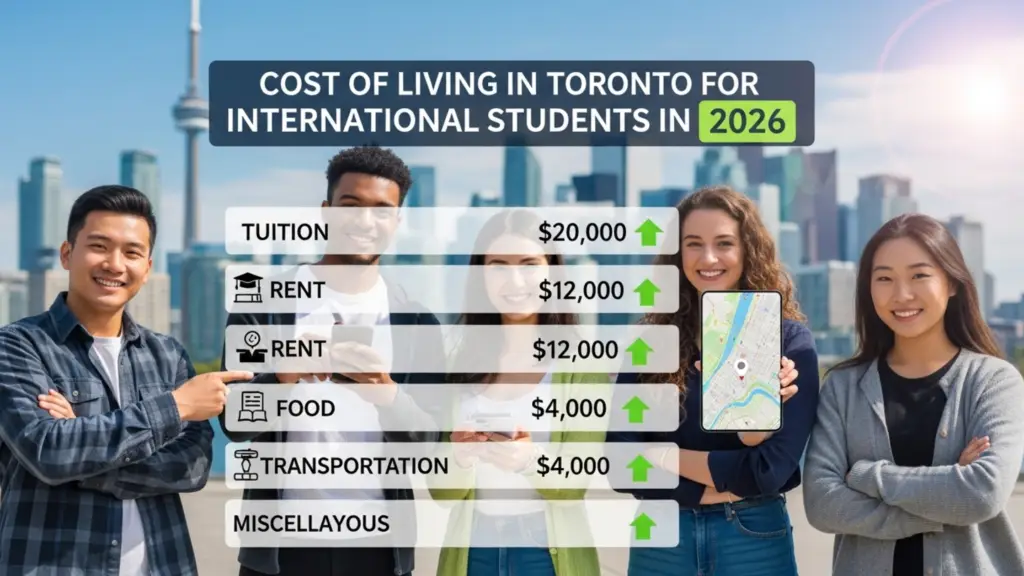
Introduction: Is Toronto Worth the Cost?
Let me be straight with you — Toronto is not cheap. As Canada’s largest city and a globally ranked academic hub, it comes with a price tag that surprises many first-time international students. But here’s the thing: thousands of students arrive in Toronto every year, build incredible careers, and look back on those years as the best investment they ever made.
The secret is not avoiding the costs — it’s understanding them before you land.
In this guide, I’ll break down every major expense you’ll face as an international student in Toronto in 2025–2026, from rent and groceries to transit and health insurance. I’ll also show you practical, proven ways to stretch your budget without sacrificing your experience. Whether you’re heading to the University of Toronto, York University, Toronto Metropolitan University, or a college program, this guide was written for you.
| 📌 Quick Answer: International students in Toronto should budget between CAD $2,000–$2,800 per month for total living expenses (excluding tuition), depending on lifestyle and housing type. With shared accommodation and smart budgeting, costs can be managed closer to CAD $1,500–$1,800/month. |
Overview: Why Toronto Is a Top Study Destination
Toronto consistently ranks among the best cities in the world for international students — and for good reason. The University of Toronto holds a QS World Ranking of #21 globally (2025), making it one of the top 25 universities on the planet. The city itself is one of the most multicultural on earth, with over 200 languages spoken across its neighbourhoods.
Beyond the academic prestige, Toronto offers a booming job market. As Canada’s financial and commercial capital, it provides unmatched networking and internship opportunities — especially for students in business, engineering, technology, and health sciences. The city’s Post-Graduation Work Permit (PGWP) pathway and route to Permanent Residency make studying here a strategic life decision, not just an educational one.
But let’s not sugarcoat it: this city ranks among Canada’s most expensive. According to data from York University’s Faculty of Graduate Studies, housing alone in Toronto runs between CAD $1,500 and $2,500 per month — and that’s before food, transit, and other essentials.
Understanding exactly what you’ll spend — and where you can save — is the first step to making your Toronto experience a success.
1. Housing and Accommodation (Your Biggest Expense)
Housing will consume the largest share of your monthly budget in Toronto. Prices vary significantly depending on whether you choose on-campus, off-campus shared, or private accommodation.
On-Campus Housing
On-campus residence is convenient, especially for first-year students still finding their footing. It usually includes utilities, internet, and sometimes meal plans. However, spots are limited and fill up quickly — you need to apply as early as possible.
- On-campus housing costs: CAD $800–$1,800/month (utilities often included)
- Annual on-campus housing cost: Approximately CAD $9,000–$12,000/year
- Best for: First-year students, those prioritising campus community
Off-Campus Shared Housing
Sharing a 2- or 3-bedroom apartment is by far the most popular strategy among budget-conscious students. According to Moving2Canada’s April 2025 rental analysis, a shared room in downtown Toronto ranges from approximately CAD $1,100–$1,500/month. Venture outside the downtown core — east of Coxwell Ave., west of Roncesvalles Ave., or north of Lawrence Ave. — and rental prices drop significantly.
- Shared room downtown: CAD $1,100–$1,500/month
- Shared room in North York/Scarborough: CAD $900–$1,200/month
- Splitting a 2-3 bedroom apartment: CAD $600–$900/person/month
- Best neighbourhoods for students: North York, Scarborough, Etobicoke, Kensington Market
Private Studio or 1-Bedroom Apartment
If you prefer privacy and have the budget for it, expect to pay significantly more. Private studios and one-bedrooms in Toronto are not for those counting pennies.
- Private studio (major cities): CAD $2,000–$3,000/month
- One-bedroom apartment (Toronto average, 2025): CAD $1,600–$1,900/month
- Best for: Graduate students, couples, those with higher budgets
| Housing Type | Monthly Cost (CAD) | Best For |
| On-Campus Dorm | $800 – $1,800 | First-year students |
| Shared Room (Downtown) | $1,100 – $1,500 | Budget-conscious students |
| Shared Room (Suburbs) | $600 – $900 | Cost-savers near transit |
| Private Studio | $2,000 – $3,000 | Privacy-seekers |
| 1-Bedroom Apartment | $1,600 – $1,900 | Graduate students |
📎 Source: Moving2Canada, York University Faculty of Graduate Studies, uhomes.com (2025 data)
| 💡 Pro Tip: Start your housing search 3–6 months before your semester begins. July–September is peak season in Toronto’s rental market — prices spike and availability shrinks. Early birds get better rooms at better rates. |
2. Food and Groceries
Food is your second major expense after housing. Toronto’s food scene is world-class, but it can drain your wallet if you’re eating out regularly.
Cooking at Home
The smart student cooks. Monthly grocery costs for one person who cooks most meals fall in the CAD $250–$400 range, according to MastersPortal’s international student cost analysis. Top picks for budget grocery shopping in Toronto include No Frills, FreshCo, and Walmart — which can save you up to 20% compared to premium chains like Loblaws or Whole Foods.
- Monthly groceries (cooking at home): CAD $250–$400
- Budget tip: Shop at No Frills, FreshCo, or Walmart
- Meal prepping on Sundays can cut your weekly food spend by 30–40%
Eating Out
Toronto has incredible dining — but the cost adds up fast. A meal at an inexpensive restaurant averages CAD $22 per person; a mid-range restaurant sits around CAD $56 for two. If you’re eating out frequently, your monthly food budget will easily exceed CAD $400–$600.
- Inexpensive restaurant: CAD $18–$25/meal
- Mid-range restaurant meal: CAD $22–$35/person
- Fast food combo: CAD $10–$15
- Monthly food cost (eating out regularly): CAD $400–$600
| 💡 Hybrid Strategy: Cook 5 days/week at home and allow 2 days for eating out. This approach keeps your monthly food spend around CAD $300–$400 — saving you thousands per year. |
3. Transportation
Toronto’s TTC (Toronto Transit Commission) runs an extensive network of subways, buses, and streetcars across the city. The good news for students? There are discounts available.
- Regular monthly TTC pass: CAD $156
- Post-secondary student monthly TTC pass: CAD $128
- Per-ride fare: CAD $3.30 (using Presto card)
- GO Transit (commuter trains to suburbs): CAD $5–$15 per trip depending on distance
Most students living near campus or on major transit lines do just fine without a car. Living further from campus can reduce rent — but factor in those added transit costs. Proximity to a subway station is a major value-add when choosing your accommodation.
| 💡 Use a Presto card for all transit payments. It’s accepted on TTC, GO Transit, and MiWay — and you can easily reload it online or at stations. |
4. Utilities and Internet
If utilities are not included in your rent — which is common in off-campus rentals — budget for these essential extras:
- Electricity (Hydro): CAD $60–$150/month (baseline delivery charge is ~CAD $60; heavy usage can drive this significantly higher)
- Internet: CAD $40–$80/month (student discounts available — always ask your provider)
- Cell phone plan: CAD $40–$80/month (Canadian plans are known for being expensive; ask about student or newcomer discounts)
- Tenant’s insurance: CAD $15–$30/month (highly recommended — covers liability and accidental damage)
According to the University of Toronto’s own Student Life cost guide, electricity alone starts at a minimum of CAD $60/month and can rise substantially if you use large appliances or air conditioning. Water and gas are typically included in rental costs.
5. Health Insurance
As an international student, provincial health coverage may not apply to you in your first months — or at all, depending on your visa status. Most universities offer mandatory health insurance plans for international students.
- University-sponsored health plan: CAD $50–$83/month
- Private health insurance plan: CAD $70–$150/month
- Annual range: Approximately CAD $600–$1,000/year
Make sure you understand what your university’s plan covers before purchasing additional private insurance. Some plans include dental and vision; others are basic. Read the fine print.
6. Your Monthly Budget Breakdown (At a Glance)
Here’s a realistic monthly budget breakdown for an international student in Toronto for 2025–2026, based on three different lifestyle scenarios:
| Expense Category | Budget (Shared Housing) | Moderate | Comfortable |
| Housing / Rent | CAD $900 | CAD $1,400 | CAD $2,000 |
| Food & Groceries | CAD $280 | CAD $380 | CAD $500 |
| Transportation | CAD $128 | CAD $156 | CAD $200 |
| Utilities & Internet | CAD $100 | CAD $150 | CAD $200 |
| Health Insurance | CAD $70 | CAD $80 | CAD $100 |
| Personal & Misc. | CAD $150 | CAD $250 | CAD $400 |
| TOTAL / Month | ~CAD $1,628 | ~CAD $2,416 | ~CAD $3,400 |
📎 Sources: University of Toronto Student Life, MastersPortal International Student Guide, York University FGS, Moving2Canada (2025 data)
7. Tuition Fees for International Students
Tuition is separate from your living costs and varies significantly by institution and program. Here’s what to expect for the 2025–2026 academic year:
- University of Toronto (U of T): CAD $63,000–$74,000/year for high-cost programs (Commerce, CS); lower for some arts programs
- York University: CAD $34,000–$41,000/year depending on program
- Toronto Metropolitan University: CAD $36,800–$42,500/year depending on program
- National average for undergraduate international students: CAD $41,746/year (Statistics Canada 2025–2026 projection)
- Graduate programs (national average): CAD $24,028/year
Always verify current fees on your specific university’s official tuition page, as program costs can change annually.
8. Canadian Proof of Funds Requirements (2026)
To obtain or renew your Canadian Study Permit, Immigration, Refugees and Citizenship Canada (IRCC) requires you to show proof that you can cover your tuition plus living expenses. As of September 1, 2025, the updated requirements are:
- Outside Quebec (single student): Minimum CAD $22,895 for living expenses (up from CAD $20,635)
- Quebec (single student): Minimum CAD $24,617 as of January 1, 2026
- Two people: CAD $28,502 | Three people: CAD $35,040
| ⚠️ Important: These are minimum thresholds for immigration purposes. For a comfortable life in Toronto specifically, financial advisors and education consultants recommend budgeting closer to CAD $28,000–$30,000 for living expenses annually — not including tuition. |
9. Smart Money Tips for International Students in Toronto
After speaking with dozens of current and former international students in Toronto, these are the strategies that consistently make the biggest financial difference:
- Find Roommates Before You Arrive: Use Facebook groups, university housing boards, or platforms like uhomes.com and Amber Student to connect with future classmates. A 3-person shared apartment in Scarborough or North York can bring your rent below CAD $800/month per person.
- Apply Early for On-Campus Housing: University residence fills up fast. Apply the moment your admission is confirmed — first-come, first-served is real. On-campus housing simplifies your first year considerably.
- Get a Student TTC Pass Immediately: The post-secondary monthly pass (CAD $128) saves you CAD $28/month versus the regular pass. Small savings that add up to $336/year.
- Shop Discount Grocery Chains: No Frills, FreshCo, and Walmart consistently offer lower prices than premium stores. Meal prepping weekly can reduce your food costs by 30–40%.
- Ask About Student Discounts Everywhere: Telecom providers, movie theatres, software subscriptions, and even gyms often have undisclosed student rates. Always carry your student ID and ask — you’d be surprised how often it works.
- Open a Student Bank Account: Banks like Scotiabank and TD offer student-specific banking packages with no monthly fees and perks for newcomers. Avoid international wire transfer fees by setting up a local account immediately upon arrival.
- Use the University’s Free Resources: Most Toronto universities offer free gym access, counselling, legal clinics, career centres, and food banks for students in need. These resources are included in your fees — use them.
- Track Your Spending Weekly: Use a free budgeting app (Mint, YNAB, or even Google Sheets). Students who actively track their spending consistently overspend less. Awareness is your most powerful financial tool.
10. Common Mistakes International Students Make (And How to Avoid Them)
- Underestimating housing costs: Many students arrive expecting to find a decent private apartment for CAD $800–$1,000/month. In Toronto, that is not realistic for a private unit. Plan for shared accommodation, at least initially.
- Not budgeting for utilities: A rental listing might say $1,200/month — but if utilities are not included, your real cost could be $1,400–$1,500/month. Always ask what’s included.
- Skipping tenant’s insurance: At CAD $15–$30/month, this is one of the cheapest and most important purchases you’ll make. It protects you against liability and accidental damage.
- Ignoring neighbourhood transit access: Choosing cheaper housing 45 minutes from campus sounds smart until you’re spending CAD $200+/month on transit and 3 hours/day commuting. Do the math.
- Delaying housing search: In Toronto, good student housing gets snapped up months in advance. A June start? Begin searching in January–February.
- Using only one housing platform: Cross-reference listings on uhomes.com, Amber Student, Facebook groups, and university housing boards for the best options.
Frequently Asked Questions (FAQs)
How much money do I need per month as an international student in Toronto?
You should budget a minimum of CAD $1,500–$1,800/month if living in shared accommodation and cooking at home. A more comfortable lifestyle — or living alone — will require CAD $2,200–$2,800/month or more. This is separate from tuition fees.
Is Toronto expensive compared to other Canadian cities?
Yes. Toronto and Vancouver are Canada’s most expensive cities. Students in Montreal, Halifax, or Ottawa typically spend 25–40% less on living costs. However, Toronto’s job market, university rankings, and career opportunities often justify the premium.
Can I work part-time to cover living costs in Toronto?
Yes. As an international student on a valid Canadian study permit, you are permitted to work up to 20 hours/week during academic sessions and full-time during scheduled breaks. Ontario’s minimum wage is currently CAD $17.20/hour (2025), and many students earn CAD $15–$25/hour depending on role. This can meaningfully offset living expenses, though it typically won’t cover full tuition.
What are the cheapest neighbourhoods for students in Toronto?
North York, Scarborough, Etobicoke, and East Toronto consistently offer more affordable housing than the downtown core. North York, in particular, is a student favourite due to its reasonable rents, strong transit connections, and proximity to York University.
Is Toronto cheaper than New York for international students?
Generally, yes. Toronto’s overall cost of living is approximately 27.9% lower than New York City. One-bedroom apartments average CAD $1,600–$1,900/month in Toronto compared to substantially higher figures in Manhattan and Brooklyn.
What is the proof of funds requirement for a Canadian study permit in 2026?
As of September 2025, single students (outside Quebec) must show minimum living funds of CAD $22,895 plus tuition. In Quebec, the requirement is CAD $24,617 as of January 2026. These are minimums, Toronto-based advisors recommend budgeting considerably more for comfortable living.
Do international students get health insurance in Toronto?
Most Toronto universities provide mandatory health insurance plans for international students at CAD $50–$83/month through university-sponsored programs, or CAD $70–$150/month for private plans. Always confirm your coverage before travelling — provincial health insurance (OHIP) has waiting periods for new residents.
Conclusion: Plan Smart, Thrive in Toronto
Toronto will challenge you — academically, financially, and personally. But it will also reward you in ways that are difficult to fully quantify until you’re living it. A degree from a Toronto university carries genuine weight in the global job market. The city’s diverse, energetic culture will expand your worldview. And the connections you make here, both academic and professional can shape the trajectory of your career.
The students who struggle financially in Toronto are almost always the ones who arrived without a realistic budget. The ones who thrive are those who planned ahead, found smart housing, cooked more than they ate out, used their student discounts, and tracked their spending from day one.
Use this guide as your financial compass. Revisit it as your circumstances change. And remember; every dollar you save in Toronto is a dollar you can invest in your education, your experiences, and your future.
| 🎓 Ready to take the next step? Explore our guides on Canada Student Visa Requirements 2026, Best Scholarships for International Students in Canada, and How to Open a Bank Account in Canada as an International Student — all on KingsleyBiz.com. |
Disclaimer
This article is for informational purposes only. Cost figures reflect data available as of early 2026 and are subject to change. Always verify current fees, rent prices, and immigration requirements with official sources including IRCC (canada.ca), university financial offices, and local housing platforms. KingsleyBiz.com is not a licensed immigration consultant.